The Atelier Questionnaire featuring SUPRINA by Stephanie JT Russell
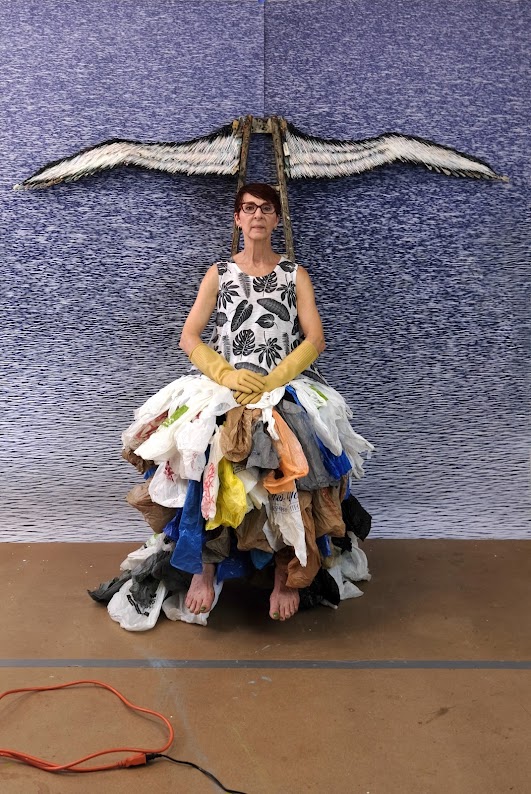
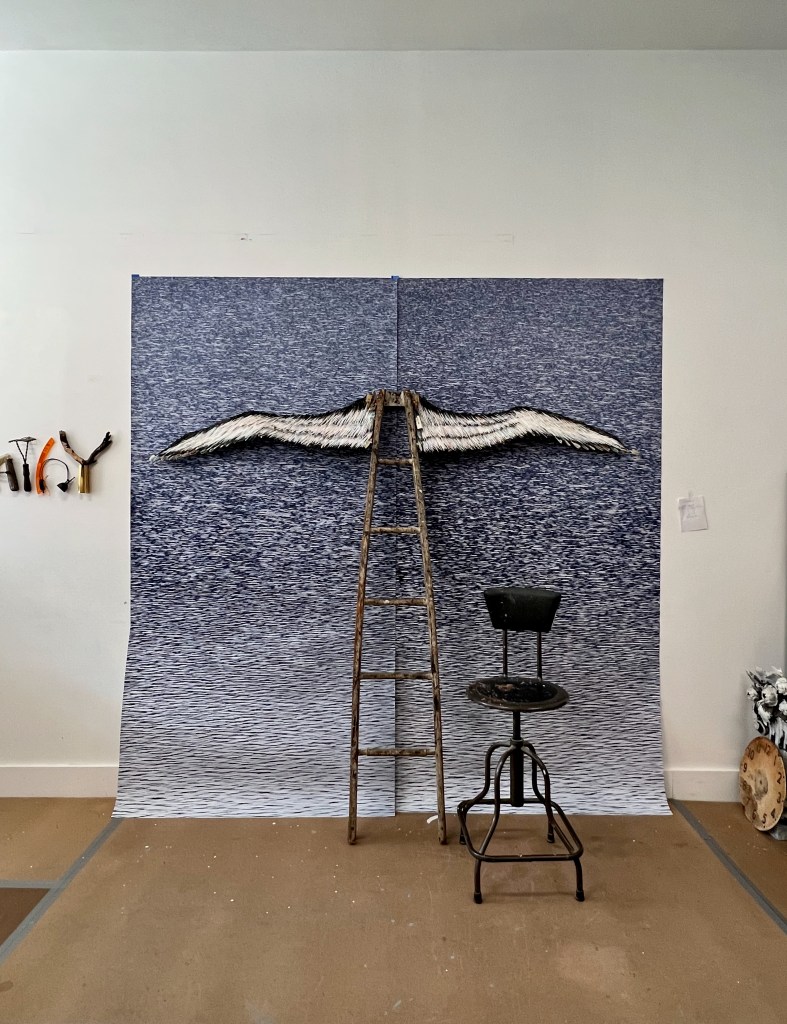
Suprina employs a dizzying array of found objects—in her words, plain old trash—across her sculpture, installation, and performance works. The daring spectrum of her output is rigorous and purposeful: phrases constructed of cutlery, rusted tools, and tiny detritus, floating on a wall with no visible hardware; delicate, plastic-feathered albatross wings, spanning atop a rickety wooden masonry ladder; a monumental handgun made of tightly jammed, beat-up old stuffed toys, dozens of innocent resin eyes gazing back at the viewer in silent indictment.
You don’t just look at a Suprina sculpture, or merely witness her installations: you’re a vital, performative element in the artist’s investigation of humanity’s cycle of acquisition, usage, and discarding—volatile, yet strangely tender, metaphors for the depletion of empathy in late-stage capitalism.
After studying sculpture at the University of the Arts in Philadelphia, Suprina acquired a mastery of materials as a prop craftswoman for clients such as Annie Leibovitz, Apple, and the Macy’s Thanksgiving Day Parade. After 9/11, Suprina focused on addressing crises of environment, war, and racism, deftly implying a call to personal and collective healing. Suprina shows widely in New York, Chicago, the Hudson Valley, and New England. In 2023, she opened Conveyer/Or, an intimate gallery and studio in downtown Poughkeepsie. See details of her upcoming solo exhibition at Jane Street Gallery, in Saugerties: https://www.suprinasculpture.com
The Atelier Questionnaire is inspired by The Proust Questionnaire, a parlor game popularized (though not devised) by Marcel Proust, the French essayist and novelist. Proust believed that, in answering certain questions, an individual reveals their true nature. We agree, and likewise believe that every picture tells a story. The Atelier Questionnaire’s inaugural installation, conducted in word and captured in image by this byline writer, is answered by Suprina, an agent provocateur of heart, mind, castoff repurposing, and soul.
AQ: What’s your idea of a perfect day in the studio?
Suprina: That’s an easy answer, but hard to get! No emails, no texts, no calls, no grants due, no art to deliver …and one short, inspiring visit from someone.
AQ: How do the materials you work with affect your process?
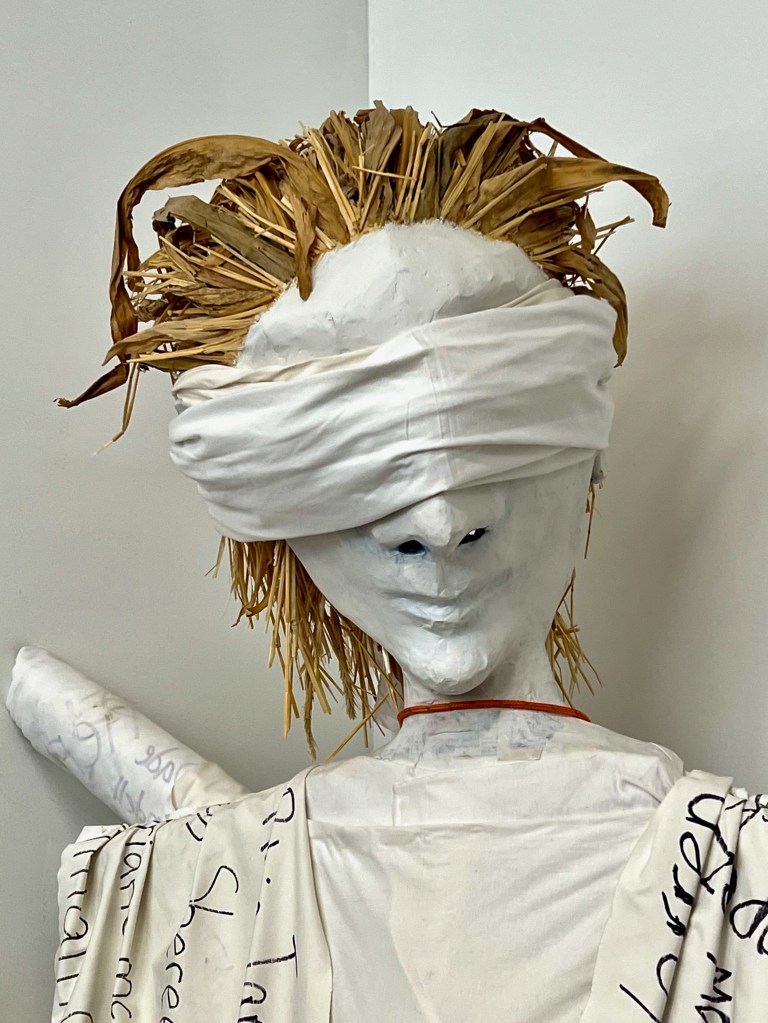
Suprina: Because I constantly use new materials from found objects, I’m always trying to unite different objects. I am always trying to make a hardware connection, and an adhesion connection, unless I want the hardware to show. But usually, I don’t want the hardware to distract the viewer, so the art of camouflage is very important. The most important thing to me is listening while I’m working. The absolute, most important part of the process is keeping my ego out of the way so the intuitive nature of the object itself meets the intention of the piece.
Outside the studio, I try to stay open to options in my life. There are multiple options in every scenario. It’s a matter of being willing to sitdown and shut up for a while to be as truthful as I can with myself. And being able to forgive yourself and give yourself praise—most artists I know aren’t so good at publicly stating what we’re good at.

AQ: If you could change one thing about your process, what would it be?
Suprina: Drying and curing slow down the process. For example, I often use a water base, nontoxic epoxy to bring multiple objects together; I leave it to cure for 24 hours. Papier Mache can take a very long time to dry if it has any thickness. These aspects can slow the process—which has both good and bad sides. It’s a double-sided coin that can go in any direction. That’s where the listening skill comes in: if you come in the next morning after a section of a piece dries, and it doesn’t fit perfectly, you might have to slow down and change the direction of the process. You know when it’s right, and when it’s “just okay”—because you aren’t listening to the piece through your ego. I was drawn to sculpture very early on. Stone and wood carving isa subtractive process, but my trash process is at once both additive and subtractive, and more forgiving. One reason I work with found objects, instead of carving stone, is that three-dimensional carved work presents many problems with storing and installation. Using trash materials gives me a lot of freedom and flexibility in the whole process, right up to storing and installing the art.
AQ: What do you most value in your community of artists and cultural workers?
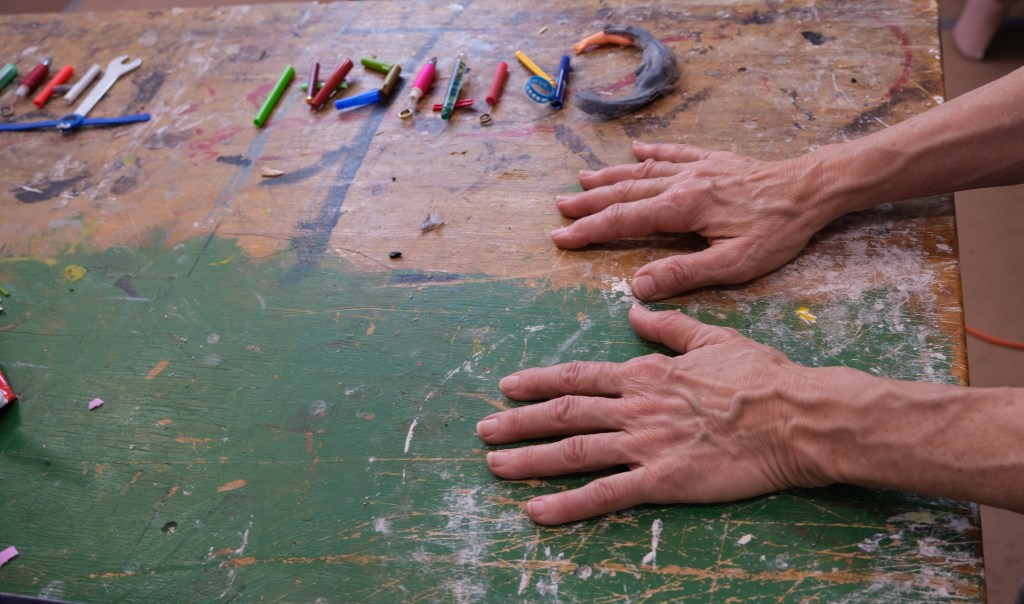
Suprina: Their freedom and their thoughtfulness. Like this talk we’re having now. I know I can say anything to you, and that you would respond with thoughtfulness and never with judgment. Those two values are above and beyond everything else, and the most important thing in veery relationship. My artist friends are kin. They don’t judge each other people—however much they might judge themselves! What comes from freedom and thoughtfulness is support—it’s an outcome of the main piece that begins in open dialogues.
AQ: If you were to die and come back as a person or a thing, what would it be?
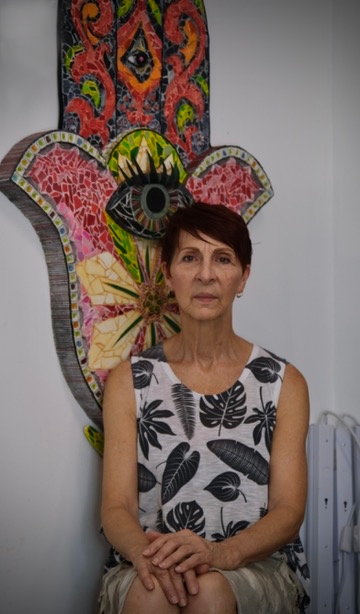
Suprina: Ha! —we all think about that at some point, right?I always wanted to be a dolphin. But lately, with our waters so polluted, I’d want to be an albatross—a poetic life in the sky. Just now, I’m looking out the window and wondering what it would be like to live the fleeting life of a snowflake.
Interviewer Stephanie JT Russell is an author, poet and artist. She serves as the Poet Laureate of Dutchess County, New York.
Her work is published here in Lightwood and can be seen by going to our Search Button and entering her name.
 Lightwood
Thanks Pina for offering very interesting questions and thanks Suprina for your thoughtful and soulful answers.
LikeLike