Book Review of The Girl from Magnolia Street by Aimee Spring (Always Spring Publishing 2025) by Janet Irizarry
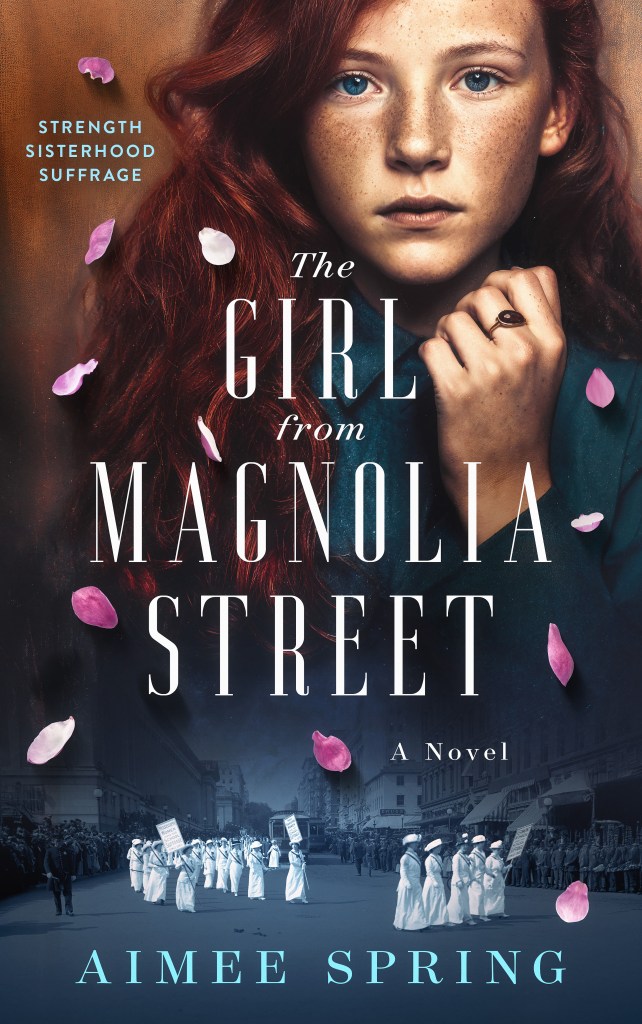
Aimee Spring’s The Girl from Magnolia Street doesn’t just draw you in — it stays with you. Spring began with a ten-page memoir written by her grandmother, and the novel carries that lineage of women telling their own stories forward. Set in 1911 Rochester, amid the suffrage movement, the novel follows Helen O’Donnell, a young Irish-Catholic girl growing up in a world where women are expected to be obedient and silent. Within this patriarchal, faith-bound society, Helen begins the quiet journey toward independence and self-expression — learning to think and speak for herself despite immense social pressure not to. Her awakening unfolds against the backdrop of the suffragist movement, a time when women across the country were fighting to be heard and to claim their rights.
Spring reminds us that real courage comes from authenticity: being true to yourself even when it goes against expectations. The way society, religion, and family defined what women “should” be may have changed, but Helen’s struggle to find her voice still feels strikingly relevant today.
The story unfolds in a world dominated by men — in the home, the church, and the government — yet what rises from its pages is the power of sisterhood and found family. The suffragist women Helen encounters become mirrors of possibility. They represent not only a political movement but also an awakening of self — a reminder that every act of courage, however small, contributes to something larger. Through them, Spring brings to life the journey of the suffragists in a way that made me deeply appreciate the women who fought for our rights, which so many of us now take for granted.
Throughout the book, symbolism adds another layer of beauty and meaning. The red cardinal, appearing again and again, serves as a reminder of Helen’s grandmother — a presence that continues to guide her. Having lost my own mother and often seeing the symbols she left behind, I found this deeply relatable. Sadie, Helen’s cherished doll named after her mother, feels as real as any character in the story, representing both her innocence and her longing for connection. These simple objects carry emotional weight — each a small anchor of comfort in a life that has given her little control.
Helen’s journey is not an easy one. There are moments in this book that are heartbreaking — scenes that confront the painful realities of abuse, domination, jealousy, and betrayal. There were times I cried for her, because no one deserves the pain she endured. Yet Aimee Spring has a gift for writing about hardship in a way that makes it bearable. Despite the sadness, this is ultimately a story of hope. Helen chooses not to let fear define her. She holds onto compassion, seeing the good in others even when they fail her. That quiet resilience is what makes this novel so empowering.
The emotional highs and lows mirror life itself — unpredictable, unfair, but also full of grace. Helen’s growth from an uncertain child to a young woman who sees her own worth feels like a victory for anyone who has ever questioned where they belong. Her friendship with Olive, in particular, shows the healing power of empathy, forgiveness, and true friendship.
Spring’s ability to blend the spiritual, ancestral, and symbolic undercurrents of Helen’s life with the broader historical context makes this book more than just historical fiction. She doesn’t only show us what’s happening around Helen — she helps us feel what’s happening inside her, connecting her personal journey to something larger and timeless. The outer world — the social, religious, and political realities of 1911 Rochester — grounds the story in history, but the questions it asks are universal:
- What does it mean to belong?
- How do faith and heritage shape who we are?
The novel isn’t just about what happens to Helen — it’s about what it feels like to be human. Even though Helen’s world is from 1911 and ours is modern, we still share the same core struggles: figuring out who we are, where we belong, and who loves us. The details of life change — technology, politics, social roles — but the emotional truths stay the same.
This book will especially resonate with readers who appreciate stories about women discovering who they are and claiming their place in a world that often overlooks or limits them. It’s not only about a moment in history — it’s about a woman’s inner journey to understand her worth and her purpose. Helen becomes a symbol for all of us. Spring’s sincerity and emotion come through in every sentence. Her storytelling feels genuine, never forced, and her compassion for her characters — even the flawed ones — gives the story both depth and heart.
//////
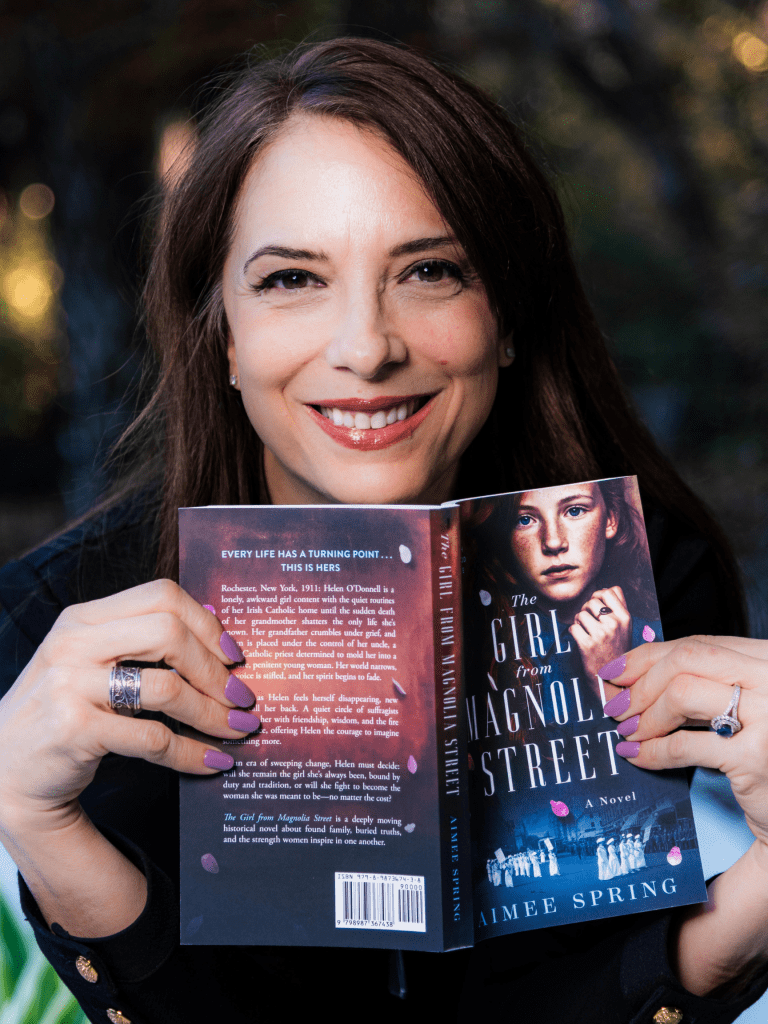
Photo Credit: HOSTESS CITY TRAVELS PHOTOGRAPHY
Aimee Spring is the author of The Girl from Magnolia Street, a novel of sisterhood and one girl’s fight to claim her own voice. She is also the author of the award-winning children’s book The Little Butterfly: For Young Hearts Who Have Experienced Loss. A New York native, Spring now lives in Savannah, Georgia, where she writes about the strength we inherit and the connections that carry us. Her books are available wherever books are sold.
Reviewer Janet Irizarry is a writer, educator, and founder of My Mindful Kitchen, a platform that explores how food, family, and mindfulness intersect to create meaningful change.
 Lightwood