
This is the story of a 40-something woman, looking back over the 40-something years of her family’s self-exile in the U.S., in search of a self.
If I’d been raised speaking English, would I be able to relish my “I” and find a narrative that reflects me, my desires, my personal history. We immigrated when I was in first grade, so I never studied my mother’s language as a child. On that day when I joined the ESL class in elementary school in Virginia, I didn’t speak a word of English. For three years, I was pulled out of homeroom with the other kids and seated in the classroom next-door with a few other immigrant children until I was fluent. By fourth grade, I was integrated back, a seamless transition, at least during classroom hours.
Later, on the days when Maman couldn’t manage to arrange her shifts at Dress Barn around my school bus schedule, I “worked” with Baba at the gas station. To this day, whenever I drive into a gas station, the fumes take me back to Baba’s Texaco. I was supposed to hang out at the station for a few hours so he could keep an eye on me, but I wanted to be more involved. Baba was usually elbow deep in grease, working on a car in one of the three bays. I’d loaf around between the body shop, watching the mechanics do inspections and car repairs, or sit outside on the curb next to the pumps.
Sometimes when a car pulled up to the full-service lane, I’d jump at the chance to pump gas like a professional. I loved the smell, the weight of the nozzle, the trigger, like a gun, so powerful in my small hands. After pumping gas, I was allowed to help with the credit card payment machine. It too was a weighty, heavy device that worked with carbon copy paper. I placed the card with the indented numbers facing up, and wrapped my hands around the weight that you pressed to imprint the credit card digits onto the paper beneath. I swiped right to get the imprint and then left to reset the machine and remove the receipt. With each swipe, I felt even more integral to the family business.
One afternoon, a shiny black sedan pulled-in to the full-service lane. I think it was a Benz or Lexus, though it could have been a regular old sedan. I walked up to the driver’s side window and peeked in, eyeing the spotless white leather seats, imagining that the taut surface would be smooth to touch. A mother and daughter sat in the front two seats, hair coiffed to perfection, wearing lipstick. The daughter was about my age, looked like one of those popular blonde girls at school that I observed from afar.
I rushed to offer my services with a big smile, probably in dirty clothes and oil smudged on one cheek. The mother looked out, startled, hesitant to roll down her window. Her lips turning up into a half-smile, she reluctantly pressed a button, the smooth glass slid down into a pocket in her car door. I didn’t say anything, too shy to speak any of my newly-acquired words. She asked that I fill up her tank.

At the time, her startled reaction seemed a natural response to my swift customer service, approaching the car even before it came to a complete stop. I probably caught her off-guard. Looking back, I now think of her hesitation as pity. Or maybe I’m reading into it my own thoughts, thinking back to those idle days I spent at the Texaco. Those were hours I could’ve spent with girlfriends at the mall, or with my brother at a park, or even alone in a library reading the many books I loved to discover.
I enjoyed my gas station days then. I liked the dirt under my nails, it made me feel important. I felt mature beyond my years during those unsupervised times.
I placed the heavy nozzle into the shiny car’s tank, taking a long sniff of the fumes as the gas poured into the vehicle. I smiled at the mother-daughter customers, making Baba proud. His gas station would’ve never survived without me.
In the bifurcated linguistic world of my childhood, I became a conduit between cultures. I have two native languages, English and Persian, yet no true “mother tongue.” One is my mother’s language. The other is the language of survival. I’m linguistically orphaned.
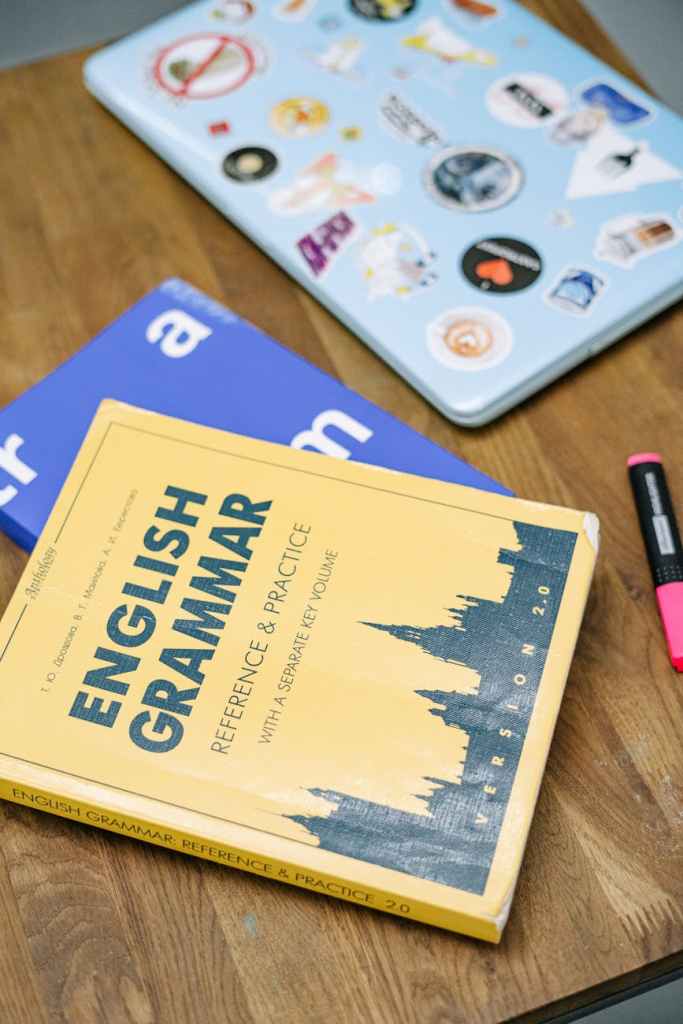
Many years later in College, I became obsessed with languages. I studied Persian, taking it every semester for four years. That’s where I first read Rumi. I also continued French which I’d begun in middle school and added Spanish. I still can’t fluently read or write Persian. Nor am I fluent in French or Spanish.
All language navigates time and memory. Our ancestors have chosen a set of words for us to use, passing on observations about their world, shaping how our brain sees this world. I try to imagine the interaction among words in my brain. They carve out physical pathways and corridors creating networks of streams and rivers among the gray and white matter eventually flowing to sounds, to speech. The choice of language takes me down different paths. Both Persian and English flow through me, seeking to connect to broader oceans and shores.
Rivers meander because they seek the path of least resistance. They do what they need to do to find equilibrium. They bend. They curve. They loop around, creating oxbows. Though I speak Persian, it’s not as one should with the language they are born into. Though I speak English, it doesn’t express my innermost sentiments, the language of my dreams. I’m split among linguistic worlds. Multiplied, left to survive in new environments without access to upstream headwater.
I can’t help but to wonder whether the fact that Persian was my first spoken language has shaped my quest for a unity of mind, body and soul. The Persian Sufi poet Rumi says: anyone pulled from a source, longs to go back. Body flowing out of spirit, spirit up from body – no concealing that mixing.
///////
Read Parts 1 and 2 of N.S. Gobi’s memoir here on Lightwood. Scroll to our Search Button, insert the name and click. And be sure to read other memoirs published here.
N.S. Goli is a writer born in Iran who immigrated to the U.S. in the early 1980s with family. The author is currently working on a memoir about identity and belonging among the Iranian diaspora.
 Lightwood