Entwine by Mary Newell. BlazeVox books; 2025; 92 pages, perfect bound; ISBN: 978-1-60964-492-5; / $18
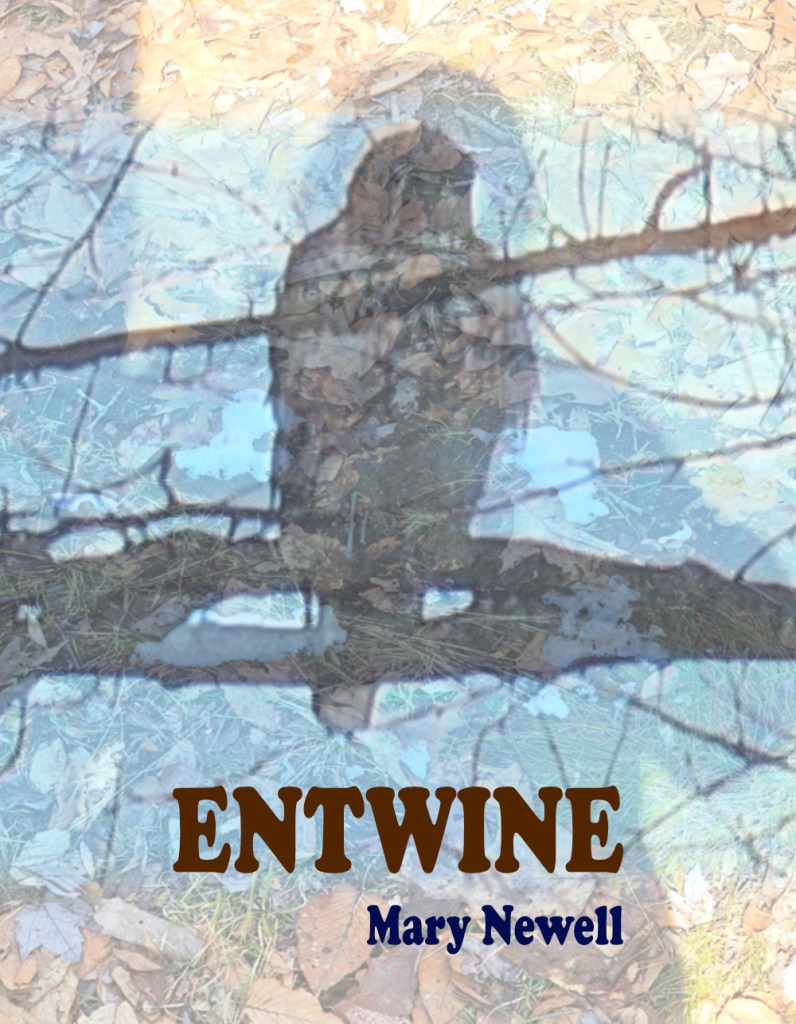
A multidimensional ode to Earth’s varied and interconnected inhabitants, Entwine, Mary Newell’s first full-length volume of eco-poetry, is joyful and elegiac, playful and instructive, and overall, refreshing. The speaker of the poems maintains an enthralled but respectful distance. Hers is a voice that remains light and even, as she participates in and observes her environment, with an aim to cultivate rather than disturb, and to connect without causing harm.
Entwine ranges widely through space and time, from the speaker’s garden in the Hudson Highlands, where many of the poems are set, to a cemetery in Japan, and from our own time, when gingkos older than dinosaurs survived the blast at Hiroshima, to 600 million years ago, when plants and animals last shared a common ancestor. Whether using plain speaking or high diction, as well as invented compound words like “twirl-fall,” the poems are lyrical, occasionally ironic, and always precise. The author’s own black-and-white nature photos enhance the words on the page.
In Split Species Intertwined, we learn that although animals are no longer anything like plants, they remain linked by green chlorophyll and red hemoglobin, chemicals whose complementary actions are needed to keep both groups alive.
“To life on primordial Earth/oxygen was poison./Hemoglobin’s ancestors carted it away.” But now, red “root chakra, earth-tether” rises through “green, heart chakra, house of compassion,” and leaves say, “We brandish viridian/so you can flow ruddy.”
In Flying Jewels Fading, an example of entwinement on a smaller scale, we are told that hummingbirds, “joyas voladores,” are co-evolutionary with salvia, a member of the mint family, and that some species of hummingbirds have disappeared. The poem asks, “if you left behind no nametag . . . who will remember your nickname?”
Lines of Attunement is one of several poems that explore a tension between an urge to anthropomorphize other creatures and to take them as they are. The speaker notes that a hummingbird hovered “once for so long” that she “felt love dart.”
But the following year, she realizes, “This newbie doesn’t know me, doesn’t care,” but may in time “learn my features.”
A note at the bottom of the page informs us that science has shown hummingbirds can recognize faces.
In Heart Rate of Red Tailed Hawk, the speaker notes:
“this yearning/to tug the thread that tangles us together,” and says,“I ache to claim this gaze is mutual” as she honors “this space that opens/in elongated gaze.”
Other poems celebrate the connection between insects and plants. Entranced with a Buzzing Harvester asks how, with their eyes’ “thousands of facets with which to view flowers’ alluring ultraviolet,” bees can “not/buzz frenzied to sip from all.”
Lilies of the Still Pond traces the cycle of the water lily, whose flower-cup opens, fills with syrup to attract insects to unloose pollen, then closes, as she lets water-weight pull her down, until her seed spreads by floating on currents. “Who, while admiring the dance-frock’s circling flounces, envisions such complexity?”
As well as describing the glories of nature, Entwine takes darker note of the effects of climate change, including forest fires, droughts, and floods that alter the speaker’s gardening plans. And also of death and other natural limits.
Full of the thrill of being alive, and never sentimental, Entwine asks in its final poem, “do we bloom on this familiar ground?” and reminds us in another, “Sometimes we wait alert,” for an “evanescent summons.” The question may contain the answer.
Mary Newell is a devoted observer of nature’s creatures. Her voice is both lyric and scientific, co-existing with species with which we’ve evolved and continue to evolve. Entwine is highly recommended.
/////
Another poem and book review of Mary Newell’s work can be read here on Lightwood. Scroll to our Search Button, enter her name and click.
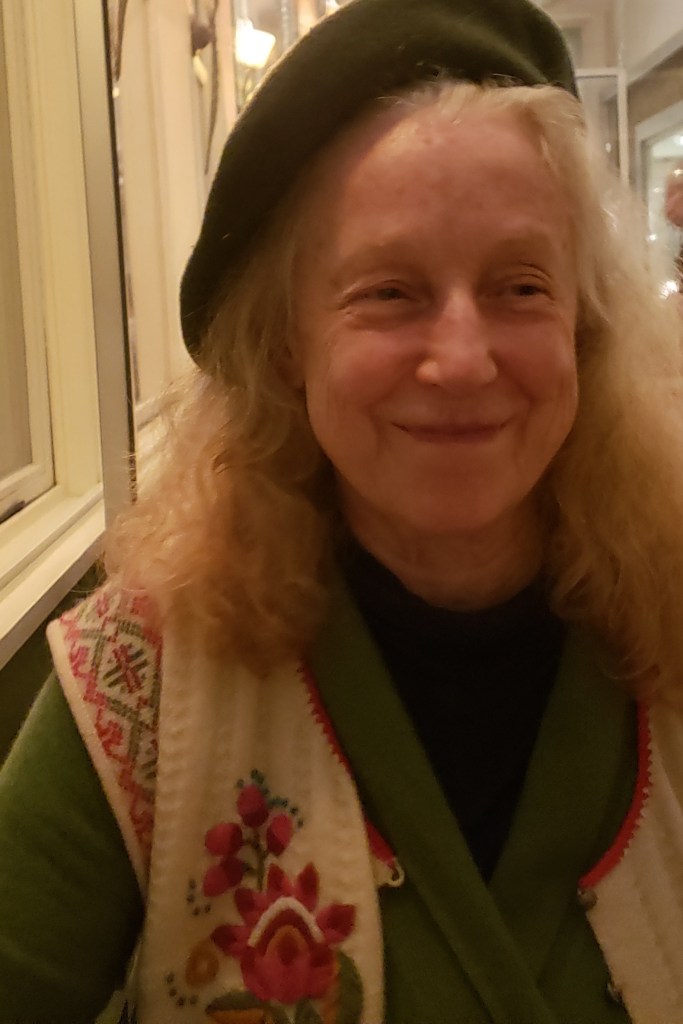
Mary Newell authored the poetry chapbooks TILT/ HOVER/ VEER and Re-SURGE, poems in numerous journals and anthologies, and occasional essays. She is co-editor of Poetics for the More-than-Human-World: An Anthology of Poetry and Commentary and the Routledge Companion to Ecopoetics. Newell teaches creative writing and literature at the University of Connecticut, Stamford and intermittent online classes. She also attends to people with musculoskeletal and neurological challenges, as a practitioner of the Feldenkrais Method of Somatic Education. Newell lives in the Hudson Highlands of New York, where she is an avid gardener of pollinator-friendly plants. Recording of a 2024 interview on ecopoetics with the Brooklyn Rail, conducted by Cole Swensen, is at: https://www.youtube.com/watch?v=wIIp-pbuSjM. Writing website: https://manitoulive.wixsite.com/maryn. Mary is also poetry mentor at The Bridge <https://poetsbridge.org/search?s=newell>
/////
Reviewer Catherine Gonick is also a contributor to Lightwood. Scroll to our Search Button, enter her name and click. She has published poetry in journals including Lightwood, Notre-Dame Review, The Orchards Poetry Journal and Pedestal, and in anthologies including Grabbed, Support Ukraine, in plein air, and Rumors, Secrets & Lies: Poems about Pregnancy, Abortion and Choice. Her first collection of poetry, Split Daughter of Eve, is forthcoming from Sheila-Na-Gig Editions in the spring of 2025. She lives in the lower Hudson Valley and works with her husbandin a business that seeks to lower the rate of global warming. The book is available for order at: https://sheilanagigblog.com/shop-sheila-na-gig-editions/catherine-gonick/
 Lightwood