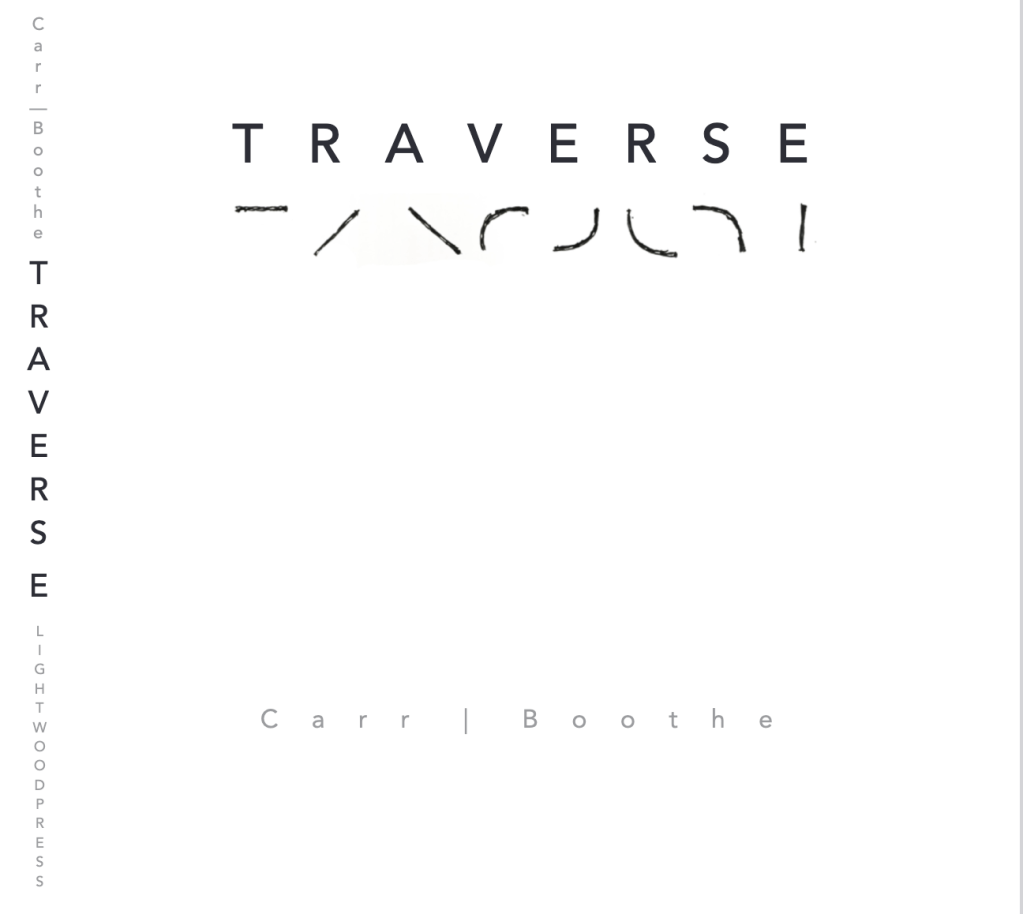
TRAVERSE is collaborative book of images by artist Power Boothe and texts by Laurence Carr, published by Lightwood Press and available through this magazine and online sources.
The book retails for $40.00 USD but through Lightwood the price is $32.00 USD with $5.00 for postage and handling, send within the U.S. Contact publisher Laurence Carr for more information: larrycarr521@gmail.com
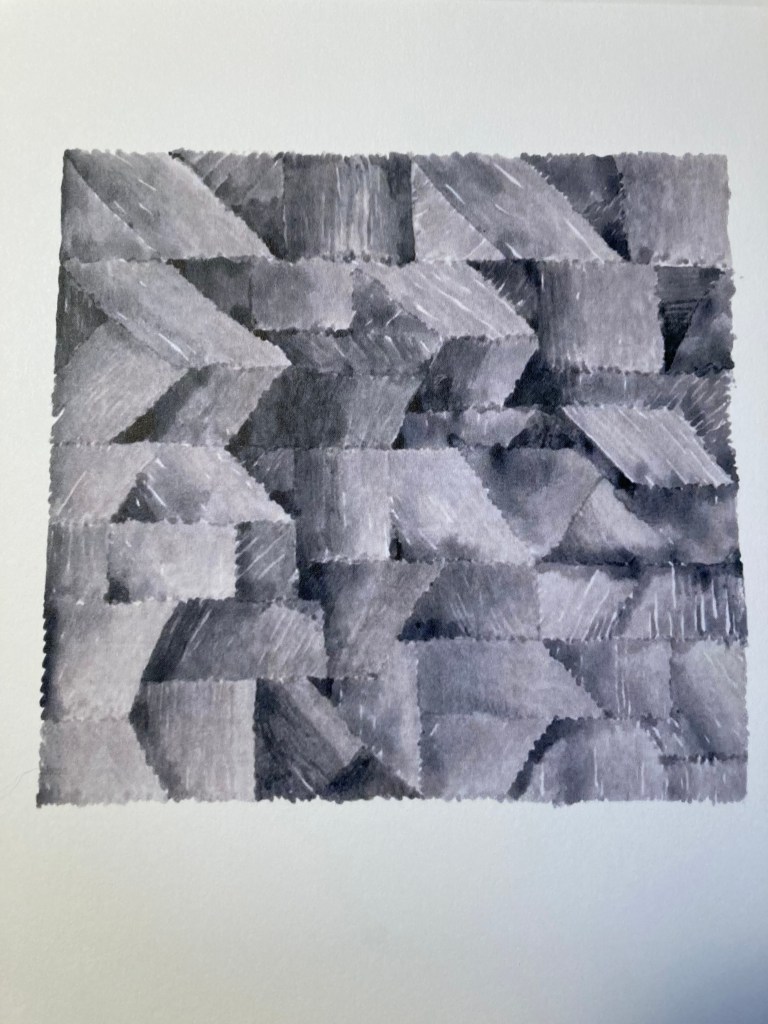
The Traverse Project, the creation of artist Power Boothe and writer Laurence Carr, is the product of many years of discussion, book lending, gallery shows, dinner preps and pondering each other’s work. The defining moment occurred when Carr thumbed through one of Boothe’s sketchbooks: page after page of 8 inch by 8 inch paintings and drawings. Months later, Carr sent Boothe a series of 8-line pieces of writing: poems, micro-essays, and unidentifiable forms. These pieces morphed into Traverse, an anthropological dig into the culture, writings, artwork and cosmology of a people who live in the past, present and future simultaneously. Traverse is their collective archive, revealed to a contemporary artist and writer.
/////
TRAVERSE p.42
“The ships’ main sails unfurl to follow the sun.
Into the sailcloth are woven metallic threads
(copper or platinum, and on rare occasions,
gold) that capture the sun’s heat and light from
the sun.
On longer voyages, the shimmer
emanating from the sails
can be seen from great distances.”
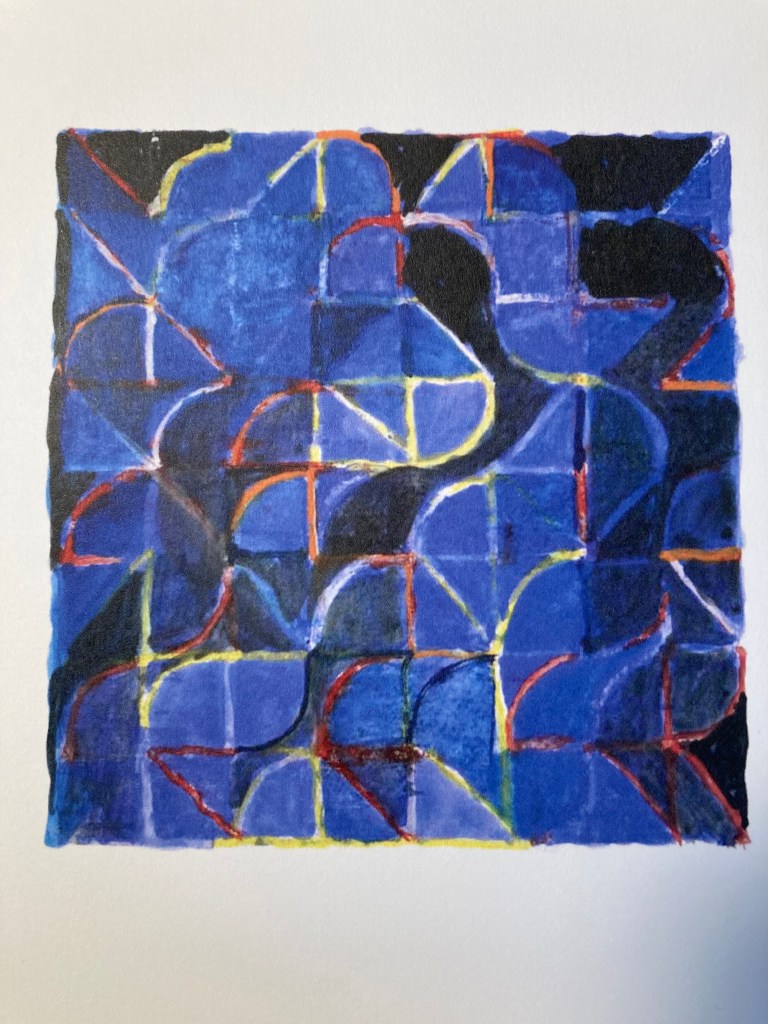
TRAVERSE p.52
“Carved from mica quartz,
the presentational chest
is offered to visitors of rank.
The cup-shaped interior is filled
with the juice of the uchasa berry,
known for its soothing properties
and is said to bring on
waking dreams. “
/////
some thoughts on Traverse by others:
In Traverse, Boothe and Carr are each in accordance with his own talent, serious about Playfulness. If you are in need of intellectual and graphic play, sit down with these pages and enjoy their singular performances. Boothe’s consistent squares contain shapes that repeat, morph or fugue into other shapes in close relationship. I see them as jazz-lines with empty mind-space completing their kinship. On the left-facing page, Carr, with unrestricted, sagacious imagination, tells us his own riff, often using quasi-Physics, Geometry or Biology. You don’t have to agree. That’s not the point. The scrolls become their natural worlds or in Carr’s words, “eye universe”. The book has a spare-clean feel thanks to designer, James Sarfati.
-Gregory Abels, author of Where to Begin and Never Something Else
/////
Laurence Carr’s and Power Boothe’s volume traverses genres in both text and image in challenging and exciting ways, spurring imaginative journeys and illumination. Carr’s evocative and original poems, moments of contemplation that explore mythic, philosophical and scientific realities, pair beautifully with Boothe’s striking and diverse drawings. An immersive experience, this interplay of word and image provides hours of revelation and enrichment.
-Jan Zlotnik Schmidt, Over the Moon . . .Gone: The Vanishing Act of Bess Houdini
/////
Each morning I open Traverse to a random page set to awaken my mind and spirit. Each combination of visual and narrative organizes my day for questioning the next steps not only for each hour and activity but the why.
- Jess Nadelman, micro-fiction author: The Aerialist and Slow to a Trickle
/////
The book is pleasant in the hand: a stolid white square, smooth to my touch. It
invites random opening and browsing, sometimes to gaze at an image, sometimes
to follow lines of text. I am reminded of mysteries of past millennia revealed, such as those seen in Werner Herzog’s Cave of Forgotten Dreams.
My eye and mental space are soothed by the regularity of form: images in an
8-block pattern, text mostly of eight lines. Is there a sedative quality to the number 8?
It may be the recurrent geometrics of the pages that reminds me of Agnes Martin,
whose work—even in distant recall—puts me in a place of receptive quietude.
And Traverse carries all sort of echoes of the I Ching.
-William G. Burnett, writer, Lightwood magazine
/////
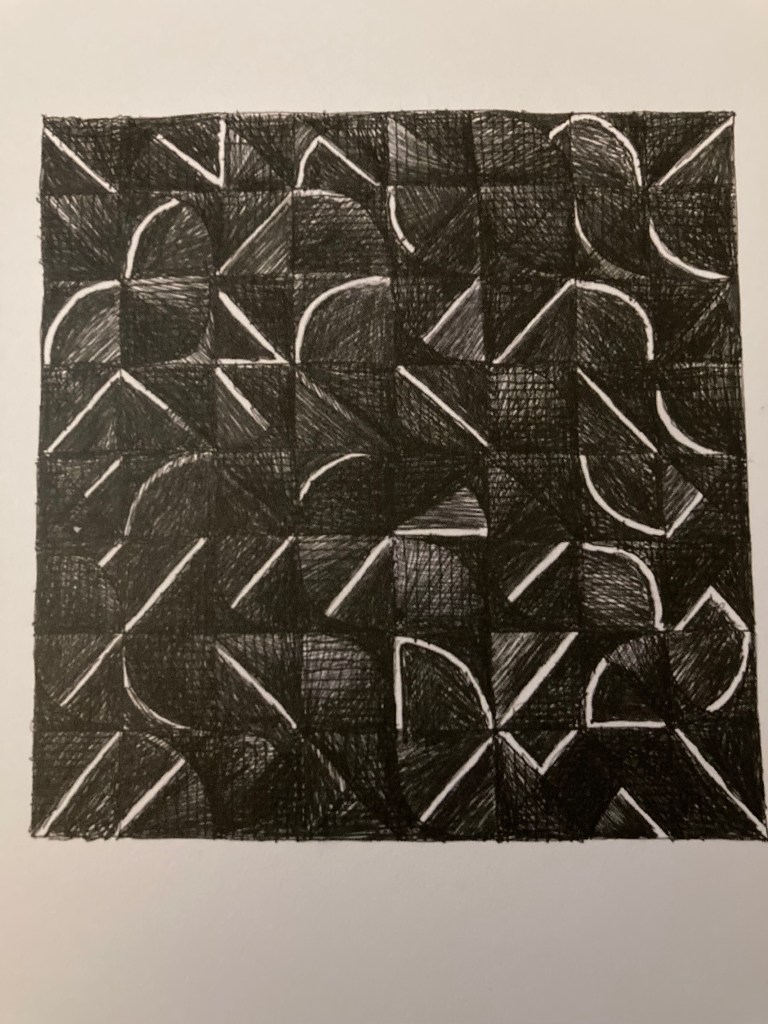
This handsomely produced book, designed by James Sarfati, is a riddle in itself. In composition, it is simple. A short text verso (Carr) faces an artwork recto (Boothe). The artwork presents a set of symbols in the form of runes, or rune-like lines, that relate to the words. How? We can assume that the coming together of poet and artist in an act of creative collaboration, is of great good fortune for us readers. Carr, a writer of impressive breadth, and Boothe, visual artist with an exemplary corpus, bring their talents to a fine point in Traverse. We are offered a sacred alphabet that conveys a force of refinement and purification to the human condition.
This is a huge and hugely invaluable project. Ultimately it tries to construct something like the I Ching, which is popularly known as a book of prophecy, but in fact presents a way to liberation through the present moment in its cosmic dimension. It is a book of initiation, to be grasped in that role only by those who seek it. ‘Once initiated, the life traveler/journeys in an everland of awareness/of past, present, and future.’ [124] The initiation draws on points of correspondence—text with artwork—to bring together creator and creature: ‘creation/creator and the reader/viewer/share . . . what was first/depicted during the imprints of the/First Journey.’ [126] Simply said.
The main point of the extended exercise appears to be a re-instatement of lost knowledge, shamanic or alchemical in nature, that once gave humans a claim to be participants in an evolving cosmos.
We are among those ‘not yet conceived’ in that mystic time. These pairs of runes are meant to transport us, to support our lives as fully human members of both worlds, interacting with divinities and animal spirits alike.
This diptych is an exciting project for which there is good reason to take up Carr and Boothe’s provocation, and to study their text.
– David Appelbaum, author, editor, publisher and founder of Codhill Press
/////
TRAVERSE Page 8
“forever is a blink eye
a gnat’s eyelash
a cat’s whisker
a table unfolding
visions appearing
words forming lips
the song
that sings itself”
 Lightwood